

In partnership with


🐶Welcome Back. Here’s your jolt of dog-understanding to feed your pup loving brain. In this digest we dig into the quiet signs that tell you when your dog is feeling fear & how to shift to fear-free. PLUS the surprising healthy science behind dogs howling to music, & the kaleidoscope of reasons your dog instantly chooses some dogs as friends while giving others a firm “no way.”…& lots more…
Enjoy!

With Pupcosy.
🧐FACT or FLUFF??
Dogs have sleep cycles
Dig down the page to find out…
THIS WEEK’S WOOF WISDOM
😌Decoding Your Dog's Fear, to Be Fear‐Free
🐺The Many Ways Howling to Music is Good for Dogs.
🐕🐩How Your Dog Decides A Dog Friend vs Dog Foe.
Listen Carefully to this Dog & DogDad Chat.
🧐More to Chew On…
😏OK..NOW WHAT? (your Q & A)
Decoding Your Dog's Fear, to Be Fear‐Free

Fear is not “bad behaviour”, it’s your dog saying, “I don’t feel safe.” The Fear‑Free approach is built around reducing FAS (Fear, Anxiety, & Stress) by learning to spot the early signs, understanding what’s causing them, & responding in ways that build trust instead of shutting your pooch down.
What are the signs to look for?
Body language: Tucked tail, ears pinned back, low body posture, trembling, panting, pacing, or “whale eye” (seeing the whites of the eyes).
Displacement behaviours: Sniffing, yawning, or looking away when it doesn’t fit the situation, a dog’s way of coping with stress.
Vocalisations: Whining, whimpering, or barking that feels tense or frantic rather than playful.
Freeze or “shut down”: Becoming very still, refusing to move, or going limp when overwhelmed.
Escape behaviors: Hiding, pulling away, trying to leave, or avoiding eye contact & touch.
What causes it?
Fear is usually tied to specific triggers, some obvious, some not.
Environments & History: Strange smells, handling, needles, exam tables, & past negative experiences.
Grooming & handling: Nail trims, baths, brushing, ear cleaning, or being restrained.
Loud or sudden noises: Thunder, fireworks, vacuums, construction, or slamming doors.
Separation & change: Being left alone, new homes, new people, or big routine shifts.
Novelty & social pressure: Unfamiliar dogs, crowded spaces, pushy greetings, or people leaning over them.
What to do when your dog is showing fear?
In the moment, your job is to make things feel safer, not “fix” the behavior.
Create space: Increase distance from the trigger whenever possible, step away, cross the street, leave the room.
Stay calm: Use a soft voice, slow movements, & relaxed body language; your dog reads you for safety cues.
Comfort is allowed: It’s rubbish that you “reinforce fear” by soothing a scared dog…you’re reinforcing trust, a good thing.
Give them choice: Let your pooch move behind you, hide, or retreat to a safe spot instead of forcing interaction.
Redirect gently: Use simple cues they know (like “sit,” “touch,” or “look”) & reward for checking in with you.
What to avoid?
Some common human reactions quietly make fear worse.
Never punish fear: Scolding, yanking the leash, or correcting growls can suppress warnings & push dogs toward biting without signals.
Avoid “flooding”: Don’t force them to “get over it” by overwhelming them (e.g., holding them still for strangers, throwing them into water when they fear it, dragging them into a vet clinic).
Don’t trap them: Cornering a fearful dog or blocking exits removes their sense of safety & can trigger fight responses.
How to build resilience, trust, & confidence?
This is where the real Fear‑Free improvement can happen with slow, kind, structured work.
Safe haven: Create a predictable safe space (crate, quiet room, cosy corner) where no one bothers them & they can decompress.
Routine: Regular feeding, walks, & sleep times lower overall FAS by making life more predictable.
Desensitise: Start with the scary thing at a distance or low intensity, pair it with high‑value treats & praise, & only move closer as your dog stays relaxed.
“Treat & retreat” for shy dogs: Have the scary person toss treats behind the dog so they can move away to eat, then choose to re‑approach.
Sniffy walks & choice‑based activities: Let your dog lead, sniff, & explore as sniffing and allowing choices lowers stress & builds confidence.
Enrichment Games: That stimulate their brain, strengthen mental health & build confidence & calm. (you can get our Best Seller Easy Enrichment Games 115+ proven mental exercises - here. Amazon link)
Trust‑building body language: Turn your body side‑on, avoid staring, let them come to you, & keep engagement short & positive.
When you need extra help?
Some fears are bigger than what love & treats alone can untangle, & that’s okay.
Calming aids: Pheromone diffusers (like Adaptil), calming music, anxiety wraps, & safe chew options can all help lower baseline stress.
Pre‑visit meds & Fear‑Free vets: For vet or grooming fear, talk to your vet about pre‑visit medication & look for Fear‑Free‑trained clinics that use gentle handling, non‑slip surfaces, & low‑stress setups.
Trained behavior help: If fear is severe, involves aggression, or is impacting daily life, a good, trained dog behaviorist can design a tailored plan & help your pup feel safe enough to learn.
So it is clear. Your pooch’s fear is not a flaw to correct, it’s a feeling to care for. When you learn to read the signs, adjust the environment, & respond with patience & protection, you’re actively teaching your dog that their world, & their people, are safe.
💎PLUS FOR PAWRENTS
1,000+ Proven ChatGPT Prompts That Help You Work 10X Faster

ChatGPT is insanely powerful.
But most people waste 90% of its potential by using it like Google.
These 1,000+ proven ChatGPT prompts fix that and help you work 10X faster.
Sign up for Superhuman AI and get:
1,000+ ready-to-use prompts to solve problems in minutes instead of hours—tested & used by 1M+ professionals
Superhuman AI newsletter (3 min daily) so you keep learning new AI tools & tutorials to stay ahead in your career—the prompts are just the beginning
“Some of our greatest historical and artistic treasures we place with curators in museums; others we take for walks”
🧠🌿WOOF WELLBEING
The Many Ways Howling to Music is Good for Dogs.

It’s not surprising that some dog parents assume their dog howls at music because the sound bothers them. However, the science says something very different.
Dogs howl to music for social & emotional reasons, & some breeds show a level of musical awareness that researchers did not expect. Ancient breeds like Huskies, Samoyeds, & Shiba Inus are especially likely to “join in,” because howling is part of their ancestral communication system.
Modern breeds tend to bark more, but the instinct to respond to long, sustained tones is still there.
What does the research show about dog musicality?
Pitch matching. Some Samoyeds can shift their howl by up to four semitones to match the key of a song.
Ancient breed influence. Breeds closer to wolves are more likely to sing along because howling is a social signal.
Emotional connection. Dogs often howl to make contact with the sound, not because they are distressed.
Relative pitch recognition. Some dogs perform when identifying pitch changes.
Some do, some don’t. Some dogs show musical aptitude, while others appear tone‑deaf.
Stress reduction. Music best suited to dogs can lower stress in grooming & care environments. (Reggae & Classical music is shown to be very effective.)
When your dog sings along, they are not complaining. They are joining the moment with you, so why not join them. 😊🎶
🐕🐩How Your Dog Decides A Dog Friend vs Dog Foe.

Dog sociability sits on a spectrum. A few dogs love everyone, a few struggle with most dogs, & most fall somewhere in the middle. They are selective, tolerant, uninterested, or occasionally bothered. Like us, this is individuality.
What shapes who your dog chooses to spend time with?
Early experiences. Positive play builds confidence. Rough encounters create caution.
Energy & style. Most calm dogs avoid chaos. Most high energy dogs seek similar playmates.
Social skills. Dogs prefer those who give space & move politely.
Health & mood. Pain, age, or fatigue shrink social tolerance.
Human influence. Tight leashes, rushed greetings, & anxious handling unsettle dogs.
How does this become “likes” & “dislikes”?
Dogs feel safest with those who match their rhythm. They avoid dogs who overwhelm them, ignore signals, or resemble past negative experiences. They also read the humans attached to those dogs. Sometimes the tension comes from the people, not the dogs.
Why do some dogs dislike another dog on sight?
Even a dog that gets along with most dogs can dislike another dog on sight. Dogs make fast safety assessments based on scent, posture, movement, & memory. One detail can trigger an instant “no.”
Common triggers
• Threat coded posture or staring
• Scent signals of stress or illness
• Past negative associations
• Distance based reactivity
• Barrier frustration (like being behind a window, fence or gate)
• Pain or discomfort
• Human tension (how they are acting)
Warning signs your dog is not comfortable
• Stiff posture or hackles up on the back (fur standing up along spine)
• Hard staring or avoidance
• Closed mouth
• Tail held high & still
• Lip licking or yawning
• Weight shift
• Low growl
What to do
• Create distance calmly
• Turn your body sideways
• Keep your voice steady
• Keep the leash loose
• End the interaction early
Best practice for dog‑to‑dog greetings
Do
• Ask the other parent
• Approach in an arc
• Keep leashes loose
• Keep first contact brief
• Look for mutual interest
• Leave while both dogs are relaxed
Don’t
• Walk straight in
• Tighten the leash
• Force a greeting
• Wait for tension (the warning signs above or one dog trying to dominate the other by placing its paws on its back)
What this means for you
Socializing with other dogs is important for their mental enrichment. You cannot choose your dog’s friends, but you can shape the conditions that help them feel safe. When you respect their “no,” manage introductions, & match them with dogs who suit their temperament, you protect their confidence & their sense of security.❤❤
🤔PAWSE TO REMEMBER
Regular Home Security Checks. Inspect garden fencing for any gaps, loose areas or spots that your dog could dig under or escape through. Check & secure gate latches & make sure doors & gates close properly or automatically if equipped, including pool gates. If there is work or activity outside via entry gates consider keeping your dog indoors.
👃🏻QUICK SNIFFS
More to Chew On.
🍄Mushroom Nootropic Power. Are these exciting results must have magic for senior dogs?
📚Restful Rover Relief…Thanks to these wonderful students reading to anxious dogs…
(& our ‘made for dogs’ story book helps them even more - Amazon Link)
🦮So Wonderful. How this blind dog made his dog parent live again.
😮OH MY DOG
Listen Carefully to this Dog & DogDad Chat.
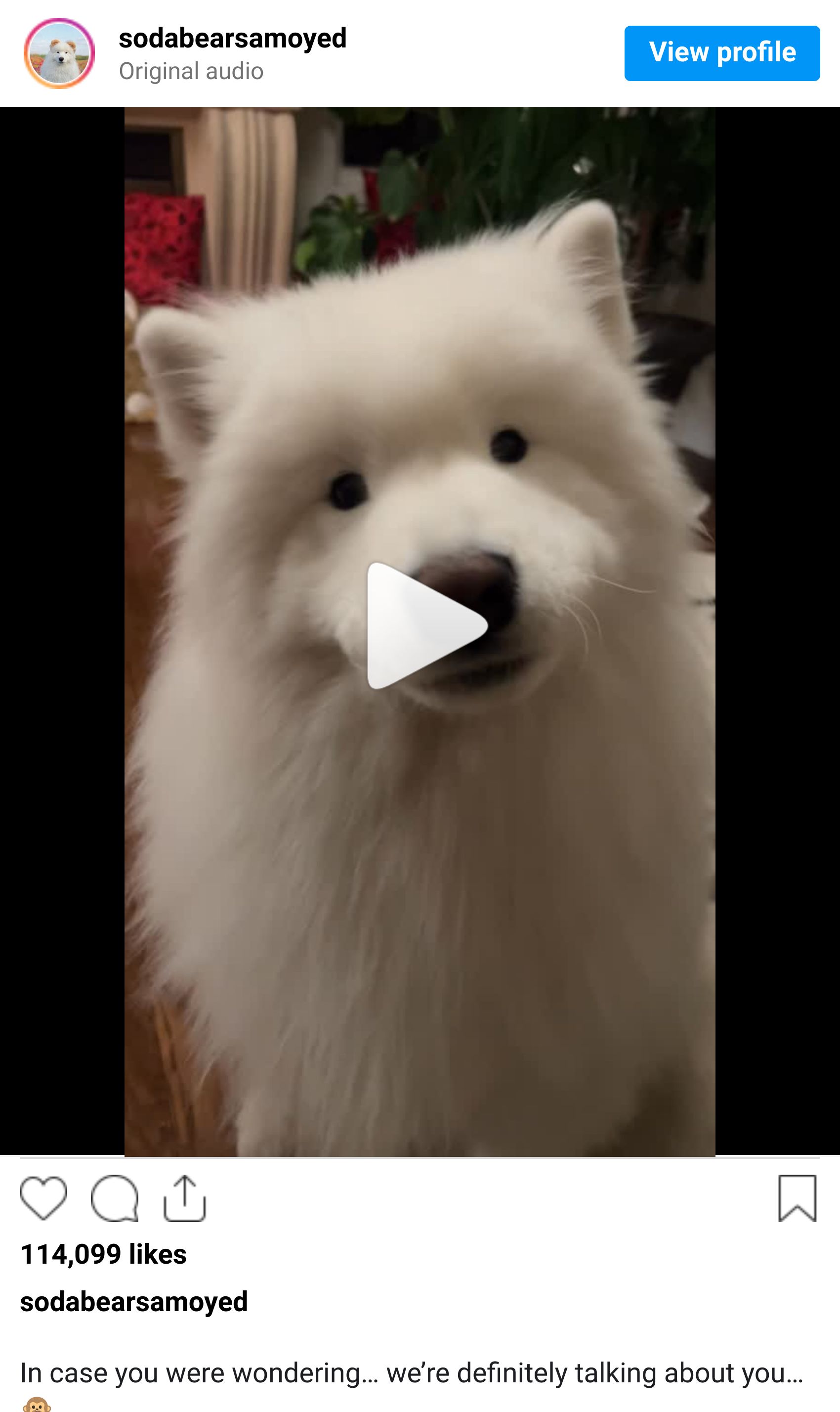
Now, Speaking of Samoyeds (as in the Howling to Music article above), meet Soda.
He & his DogDad have cracked the code of human dog conversation & created a viral video in the process.😁 Hilarious & so cute!
Enjoy.💗
🧐FACT or FLUFF??...Answer. FACT
Dogs have clear sleep cycles that consist of REM (Rapid Eye Movement) & non-REM phases like us. Dogs REM lasts only 45 minutes each, ours can last up to 60 minutes. They often show twitching or paw padding during the REM phase. Depending on the breed, dogs sleep 12-14 hours a day in shorter more frequent bursts than we do.
We are here to please🐶…
What did you think of today's digest?
Thanks for being part of the pack 😀
Keep yourself & your pups, happy & safe & see you next time!
Please share. Your friends can join Best DOGS Life here.
To help fund Best DOGS Life & at no cost to you, we may receive affiliate commission from some links. We only promote products we research & approve.
